

Latest News From The OIGNews

OIG In The News

See more news about the OIG and their work

According to the Federal Highway Administration, pedestrian crossing signals increase pedestrian safety. Yet 87 percent of signalized intersections in New Orleans did not have pedestrian crossing signals. A longstanding informal practice at the Department of Public Works (DPW) restricted the use of pedestrian signals, and decisions about when and where to install walk signals were based on a “gut call.”
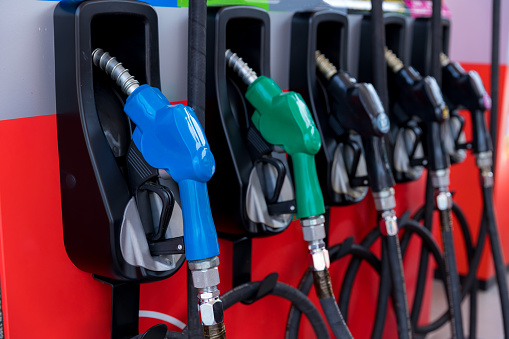

The Office of the Inspector General of the City of New Orleans (OIG) conducted a follow-up to its 2013 report, “Inspection of City of New Orleans Fuel Receiving Controls.” The objective of the follow-up was to determine the extent to which the City implemented the report’s recommendations to improve the effectiveness of its fuel receiving controls. The scope of the follow-up included all fuel delivered to the City in 2015 and compensation received since 2013 for past overbilling. In addition, evaluators reviewed changes the City made to its fuel receiving processes since the original inspection.

Evaluators found that the City made significant improvements to its fuel receiving controls at automated sites and improved its invoice review process. However, the City continued to lack effective oversight of fuel delivered to non-automated sites.

The New Orleans Office of Inspector General (OIG) conducted an evaluation of the City’s fleet management program. The purpose of the evaluation was to determine if the City had effective policies and procedures in place to manage its fleet effectively and control the cost of fleet operations.

Evaluators examined the City’s fleet management practices from 2009 through 2014. In addition to reviewing the Equipment Maintenance Division’s fleet management practices, evaluators also reviewed fleet management practices in all city departments and some outside agencies to which the City provided fleet services.

The New Orleans Office of Inspector General (OIG) evaluated the funding of the Law Department, which provide in-house legal counsel for the City. The purpose of the evaluation was to determine taxpayer costs associated with the Law Department’s role in the New Orleans justice system, and to ascertain how the Mayor, the New Orleans City Council, and the Law Department allocated resources to achieve justice system-related performance goals.

The report is part of a series of reports about the funding of the criminal justice system.

The New Orleans Office of Inspector General (OIG) followed up on its March 2013 report on the City’s delinquent property tax collection program, which found that the City paid its collections contractor ten times the cost of collection services, and that the City failed to hold adjudicated property sales. The follow-up report found mixed results in meeting the recommendations of the original report.

The New Orleans Office of Inspector General (OIG) continuously monitors the City’s procurement activities and provides technical assistance and feedback to improve the City’s procurement practices. The purpose of this review was to determine whether the Procurement Office, contract managers in city departments, and city contractors acted in accordance with policy requirements related to interim progress reporting, post-contract evaluations, and post-contract disclosures.

The New Orleans Office of Inspector General (OIG) evaluated the funding structure of the New Orleans Traffic Court (Court). The purpose of the evaluation was to determine the full cost of the Court during the years 2008 to 2012 and to determine how the City of New Orleans, State of Louisiana, and Court allocated resources to achieve the goals and objectives of the Court.

The report is part of a series of reports about the funding of the criminal justice system.

The New Orleans Office of Inspector (OIG) evaluated Driving While Intoxicated (DWI) case management at Traffic Court in Orleans Parish from arrest through prosecution, sentencing, and case closing. The goal of this evaluation was to examine how the New Orleans Police Department, the City Attorney’s Office, and Traffic Court managed DWI cases, and whether arrests, prosecutions, adjudication, and probation of DWI cases were in keeping with state laws, professional standards, and best practices.

https://nolaoig.gov/wp-content/uploads/2022/11/OIG-logo.png
Copyright © 2022 New Orleans Office of Inspector General
Contact
(504) 681-3247
525 St Charles Ave, New Orleans, LA 70130

NULL